

Louisiana Prison Guards Who Shaved a Rastafarian’s Dreadlocks Won’t Face Personal Lawsuits, Supreme Court Rules
LAFAYETTE, La. — The U.S. Supreme Court ruled Tuesday against a Louisiana Rastafarian prisoner whose dreadlocks were forcibly shaved by state corrections officers, deciding 6-3 that federal religious liberty law does not allow inmates to sue individual prison guards for money damages.
The case, Landor v. Louisiana Department of Corrections and Public Safety, centers on Damon Landor, a devout Rastafarian who had kept his dreadlocks uncut for nearly 20 years as part of his religious practice — a commitment known as the Nazarite vow. In 2020, serving a five-month sentence on a drug charge, Landor passed through two Louisiana facilities that honored that vow and let him keep his hair. With three weeks left in his sentence, he was transferred to the Raymond Laborde Correctional Center in Cottonport.
That is where things went wrong.

What Happened at Raymond Laborde
Landor arrived at intake carrying a copy of Ware v. Louisiana Department of Corrections, a 2017 Fifth Circuit ruling that established shaving a Rastafarian inmate’s dreadlocks violates federal religious liberty law. The intake guard threw it in the trash and called the warden.
Warden Marcus Myers arrived and demanded documentation from Landor’s sentencing judge confirming his religious beliefs — something impossible to produce on the spot. When Landor offered to contact his attorney, Myers told him it was “too late for that.” Guards moved Landor to another room, shackled him to a chair, and shaved his head to the scalp. Two guards held him down while a third did it.
By that point, Landor had not cut his hair in nearly two decades. It had grown to his knees.
All parties in the case — including the office of Louisiana Republican Attorney General Liz Murrill — agreed that what happened to Landor was wrong. The dispute was narrower: does the federal law he sued under allow him to collect money damages from the individual officers who did it?
The Legal Question: What RLUIPA Actually Covers
Landor sued under the Religious Land Use and Institutionalized Persons Act, known as RLUIPA, a bipartisan law passed in 2000 to protect religious freedom in two settings where it is most at risk — land-use decisions and prisons.
The issue is how Congress passed it. RLUIPA was enacted through the Spending Clause, which means it works as a condition attached to federal funding. Louisiana’s Department of Corrections agreed to follow RLUIPA as a condition of accepting federal dollars. That agreement bound the department as an institution.
The individual guards, the warden, and the other officers who shaved Landor’s head? They never signed anything. They never personally agreed to face lawsuits under RLUIPA.
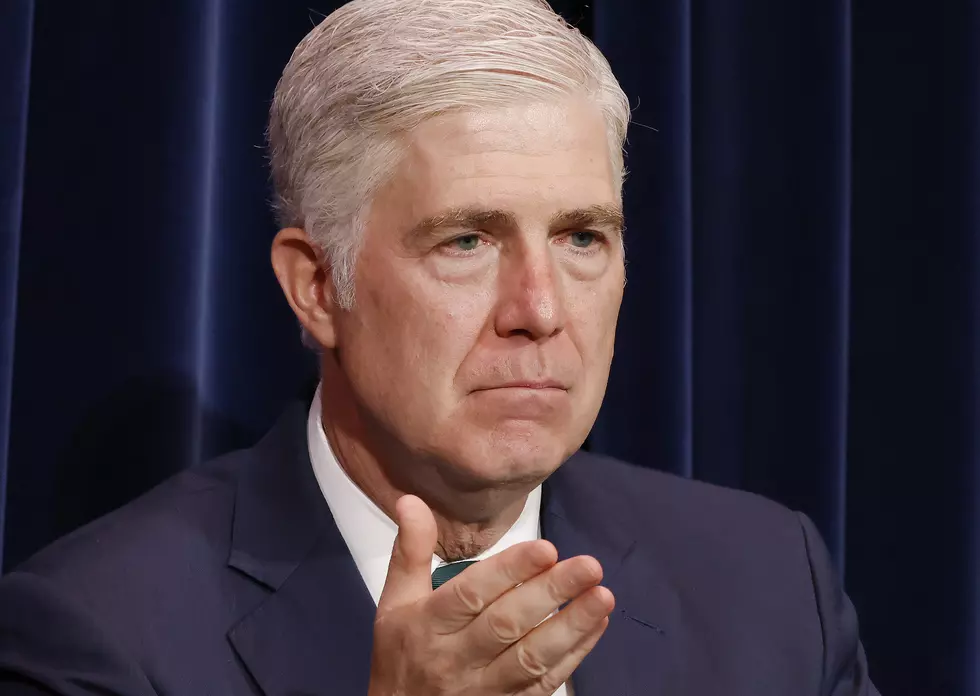
Justice Neil Gorsuch, writing for the six-justice conservative majority, said that distinction controls the outcome. The Spending Clause does not give Congress authority to regulate conduct directly — it can only impose conditions on those who voluntarily accept federal funds. Extending personal liability to employees who never agreed to those conditions would require something they simply don’t have: consent.
“Mr. Landor’s case cannot proceed against them any more than a breach of contract action might proceed against a defendant who never formed a contract,” Gorsuch wrote.
The ruling affirmed a Fifth Circuit decision that had reached the same conclusion reluctantly, with the lower court panel “emphatically condemn[ing] the treatment that Landor endured” while finding itself bound by prior precedent.
Notably, the Trump administration sided with Landor, warning the Court that blocking individual-capacity damages suits would weaken RLUIPA’s enforcement in practice. The majority ruled against him anyway.
How This Differs From a Related Religious Freedom Law
Landor’s attorneys pointed to Tanzin v. Tanvir, a December 2020 Supreme Court decision in which the justices unanimously ruled that the Religious Freedom Restoration Act permits damage suits against individual government officials. The argument: if RFRA allows it, why not RLUIPA?
The majority rejected the comparison. RFRA and RLUIPA share similar protective language, but they rest on different constitutional foundations. RFRA applies to the federal government and was enacted under Congress’s general legislative authority. RLUIPA was enacted through the Spending Clause and, as a result, carries the consent requirement at the heart of Tuesday’s ruling. That structural difference, Gorsuch wrote, is why the two statutes produce different outcomes even when their language looks similar.
The Dissent: Prisoners Are Left Without Recourse
Justice Ketanji Brown Jackson wrote the dissent, joined by Justices Sonia Sotomayor and Elena Kagan. She argued the majority’s reading strips RLUIPA’s enforcement power from the people the law was designed to protect.
The problem is practical. Prisoners who are transferred between facilities, released before litigation concludes, or — like Landor — no longer housed where a violation occurred cannot obtain injunctive relief, because there is nothing left to enjoin. Damages are often the only available remedy. Without the ability to sue individual officers for those damages, Jackson wrote, RLUIPA violations in state prisons will frequently go unaddressed.

“Prisoners like Landor who suffer violations of their religious freedom in state prisons — no matter how blatant — will often be left remediless,” Jackson wrote.
The majority acknowledged that Congress had other paths available when drafting RLUIPA. It could have required individual officers to enter their own agreements with the federal government as a condition of state employment, or conditioned funding on states enacting laws that created a cause of action against officers. Neither option was taken.
What the Ruling Means for Louisiana Prisoners
The decision does not wipe out RLUIPA entirely. Institutional suits against state prison systems that accept federal funding — like the Louisiana Department of Corrections itself — remain available. The department agreed to answer certain RLUIPA claims as part of taking federal money, and that bargain stands.
What prisoners lose is the ability to pursue individual officers in their personal capacities for money damages. That gap matters most in cases like Landor’s — when an inmate is transferred, released, or seeking compensation for a violation that a court order can no longer fix.
The 6-3 ruling divided along ideological lines, with all six conservative justices in the majority. It drew notice partly because the court’s conservative bloc has more often sided with religious liberty claims in recent years, though those wins have tended to favor conservative Christian plaintiffs. Tuesday’s outcome was a departure from that pattern.
Louisiana has since amended its prison grooming policy, according to the state’s own filings, to prevent a repeat of what happened to Landor. That change came too late to help him — and Tuesday’s ruling ensures he has no legal avenue left to pursue the guards who held him down.
You May Also Like...
- 5th Circuit Court Lifts Block on Louisiana Ten Commandments Law
- Supreme Court Strikes Down Louisiana's Congressional Map
- Louisiana Prison Reports Fifth Death Since September
The Absolute BEST Spots for Chicken Cracklins in Lafayette, Louisiana
Gallery Credit: Joe Cunningham