
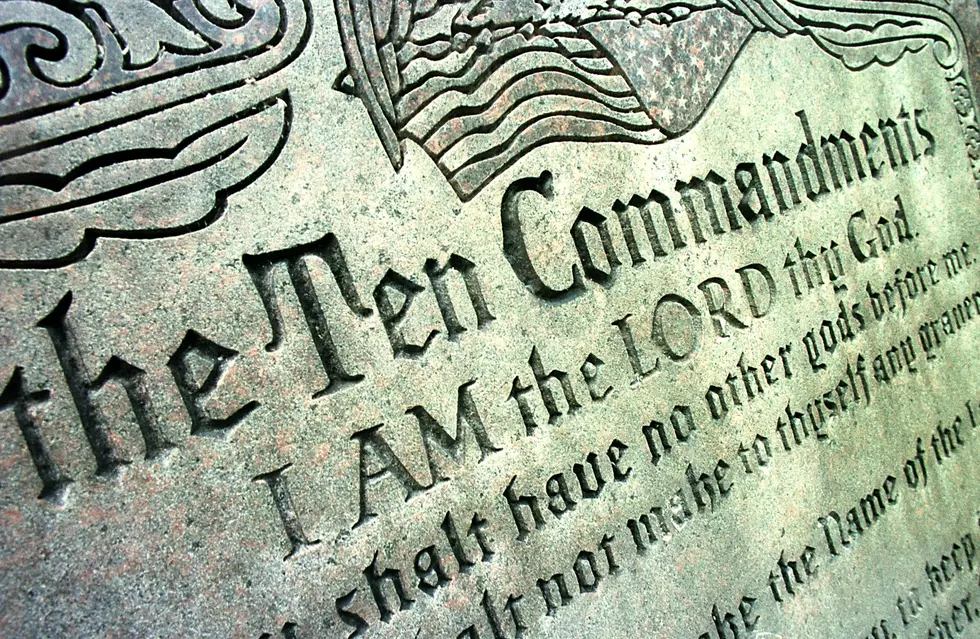
Ten Commandments Posters Are Now Going Up in UL Lafayette Classrooms
LAFAYETTE, La. — Students heading back to the University of Louisiana at Lafayette this summer and fall will find something new on the walls: posters of the Ten Commandments, now being installed across campus in compliance with state law.
UL Lafayette began hanging the displays this week under Act 676 of the 2024 Louisiana legislative session, which requires the Ten Commandments to be posted in public K-12 classrooms and every classroom at state-funded colleges and universities. The university told students in an email that it is also installing “In God We Trust” posters under a separate 2023 law.
“As a state entity, UL Lafayette follows state law,” the university’s email reads.

What the Law Requires and How It Got Here
Louisiana’s Ten Commandments law was signed by Gov. Jeff Landry in June 2024, making Louisiana the first state in the country to pass such a requirement. The law specifies a Protestant version of the text from the King James Bible, dictates minimum display size, and mandates a context statement alongside the Commandments.
Getting here took two years of federal litigation. A federal district court blocked the law in late 2024, and a three-judge 5th Circuit panel upheld that block in June 2025, calling the law plainly unconstitutional. The full appeals court then took up the case, and on February 20, 2026, an en banc panel voted 12-6 to vacate the injunction.

That ruling was not a declaration that the law is constitutional. The majority said the challenge was premature: the displays had not yet been installed and no factual record existed for the court to evaluate. New legal challenges can be filed once the law is in effect.
The ACLU, which represents the families challenging the law, said after the February ruling that it is “exploring all legal pathways forward.”
The posters are paid for with donations, consistent with guidance issued by the Louisiana Attorney General’s Office, not through public funds.
The Texas Ruling and What It Could Mean for Louisiana
A parallel legal battle in Texas has produced the most direct ruling yet on whether laws like Louisiana’s survive a First Amendment challenge.
In April 2026, the 5th Circuit ruled 9-8 that Texas’ Senate Bill 10, nearly identical to Louisiana’s law, is constitutional and does not violate the First Amendment’s Establishment Clause. Writing for the majority, Judge Stuart Kyle Duncan rejected the argument that displaying the Commandments amounts to government endorsement of religion.
“To plaintiffs, merely exposing children to religious language is enough to make the displays engines of coercive indoctrination,” the majority wrote. “We disagree.”
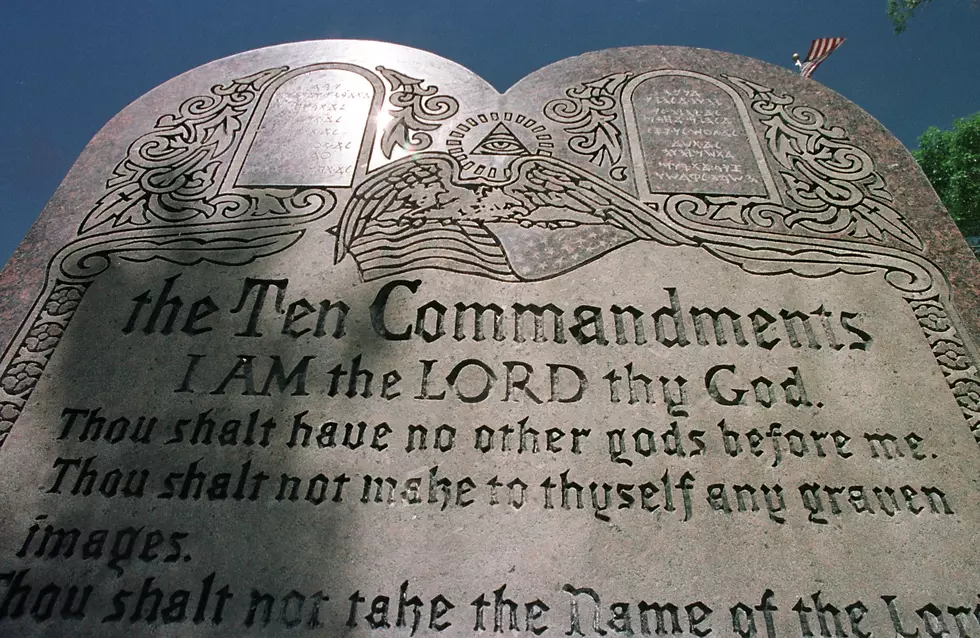
The majority drew on the U.S. Supreme Court’s 2022 decision in Kennedy v. Bremerton School District, which ended the decades-old “Lemon test” used to evaluate church-state questions. Courts now ask whether a law resembles what the founding generation understood as an “establishment of religion.” The majority said it does not.
Eight judges dissented, arguing that the 1980 Supreme Court precedent in Stone v. Graham, which struck down a nearly identical Kentucky law, still controls.
That Texas ruling has direct implications for Louisiana. The nola.com analysis of the decision notes it could strengthen Louisiana’s legal footing when the constitutional merits of Act 676 are finally argued. Both cases are widely expected to reach the U.S. Supreme Court.
UL’s Position and What Students Can Expect
The university is not taking a position on the law’s merits. UL Lafayette’s email to students frames the installation as routine compliance for a state institution operating under state authority.
Students returning to campus this summer and in the fall will find the displays in classrooms alongside the national motto posters required under Act 264, which the Louisiana Legislature passed in 2023.
Legal challenges to Act 676 are ongoing. The February en banc ruling explicitly preserved the right to bring new lawsuits once the displays are up and a factual record exists, meaning the situation at UL and at K-12 schools statewide could shift if courts take up the question on the merits.
Things You MUST Experience When Visiting Lafayette, Louisiana
Gallery Credit: Joe Cunningham
