Two Lafayette Men Arrested After Flock Camera Torn Down As Privacy Debate Erupts
Two Lafayette men are facing criminal charges after police say they intentionally disabled a Flock Safety camera in Lafayette, but the arrests have sparked a much larger conversation about surveillance technology, privacy, and public safety.
While authorities allege laws were broken when the camera was torn down, much of the public discussion has shifted away from the suspects themselves and toward the growing network of automated license plate readers installed throughout Lafayette.
Two Lafayette Men Charged After Flock Camera Disabled
According to a report from KLFY, Lance Jones, 33, and Marvell Harris, 24, both of Lafayette, have each been charged with one count of damage to property with intent to defraud.
Police say the pair allegedly tore down a Flock camera located in the 300 block of East Verot School Road last Thursday evening. Investigators say the suspects were ultimately identified using footage captured by the very camera they are accused of disabling.
Harris was arrested Tuesday afternoon and later released after posting a $2,500 bond. Jones was arrested Wednesday and remains in the Lafayette Parish Correctional Center on a $10,000 bond.
The Online Reaction Quickly Became The Bigger Story
If the arrests generated attention, the response on social media generated even more.
Hundreds of comments poured in following KLFY's Facebook post, with a significant majority expressing opposition to Flock cameras rather than focusing on the alleged crime itself. While some defended the cameras as an effective crime-fighting tool, many others described them as an invasion of privacy, questioned government surveillance, or called for additional safeguards governing how the technology is used.
Many commenters jokingly posted fake alibis for the two suspects, while others argued the cameras have become too widespread or questioned how the data is stored and accessed. A smaller number of commenters noted that the arrests themselves demonstrated the technology's effectiveness, pointing out that investigators said the camera captured evidence leading to the suspects' identification.
Although the Facebook comments reflected strong opposition to the cameras, they represent the views of people participating in that discussion and should not be interpreted as any type of scientific measure of public opinion.
What Are Flock Cameras?
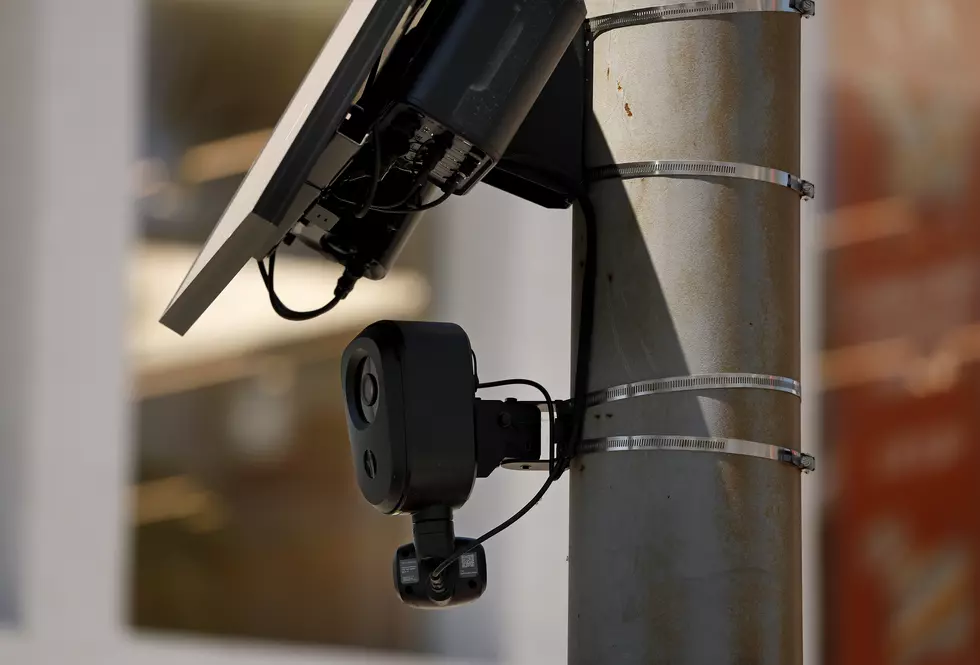
Flock Safety cameras are automated license plate reader (ALPR) systems that use cameras and artificial intelligence to capture information about passing vehicles.
Rather than simply recording license plates, the cameras also identify characteristics such as a vehicle's make, model, color, body style, and other distinguishing features. Each detection is paired with the date, time, and location before being entered into a searchable database that authorized law enforcement agencies can access during criminal investigations.
Flock Safety says its system is designed to help locate stolen vehicles, identify suspects, find missing persons, and provide investigative leads. The company also says its cameras do not use facial recognition technology and that vehicle data is generally retained for a limited period unless otherwise required by the customer.
Why Are Flock Cameras So Controversial?
The same technology that many police agencies praise has also become one of the country's most debated surveillance tools.
Supporters argue that Flock cameras have helped solve violent crimes, recover stolen vehicles, and quickly identify suspects who might otherwise never be found.
Critics, however, argue the cameras create a searchable record of the movements of countless drivers who are not suspected of any crime. Privacy advocates have also raised concerns about how long information is stored, who can search it, and whether enough oversight exists to prevent misuse. Civil liberties organizations have questioned whether widespread automated vehicle tracking could eventually conflict with Fourth Amendment privacy protections.
Across the country, some communities have expanded their Flock programs while others have paused, rejected, or removed the technology following public backlash.

Are Flock Cameras Legal In Louisiana?
Yes, law enforcement agencies in Louisiana are currently permitted to use automated license plate reader technology as an investigative tool, and there is no statewide court ruling declaring Flock cameras unconstitutional.
However, their use remains the subject of ongoing debate. Questions surrounding data retention, public transparency, oversight, and access to collected information continue to be discussed both in Louisiana and nationwide. Louisiana law places restrictions on certain automated traffic enforcement programs, but those laws are separate from investigative license plate reader systems like Flock.
As more cameras appear across Acadiana, those conversations are likely to continue.
The Debate Isn't Going Away
Whether residents see Flock cameras as an essential public safety tool or an unnecessary expansion of government surveillance, one thing is becoming increasingly clear: the conversation has moved well beyond a single criminal case.
The arrests of two Lafayette men may be the headline this week, but the community's reaction has once again highlighted just how divided people remain over where the balance between public safety and personal privacy should be.
How Many in America: From Guns to Ghost Towns
Gallery Credit: RACHEL CAVANAUGH